
Art and Moral Imagination
The HollowThis flow traces how Henrietta's sculptures anticipate, interpret, and finally absorb the violence surrounding her.
increasing Bearing strength in each event
 decreasing
Bearing strength in each eventdecreasingNausicaa Contaminated
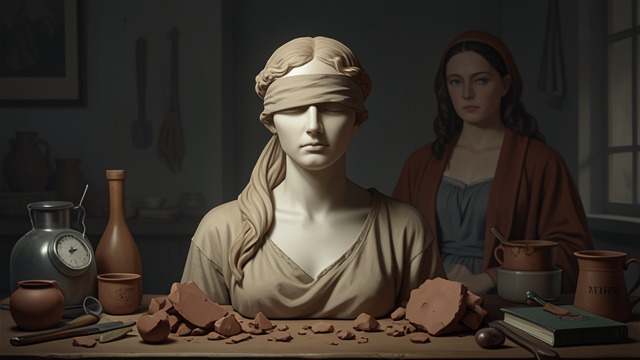
Personality in Clay
Artistic Perception
Henrietta creates Nausicaa from Doris Sanders's blind and beautiful features. Yet Doris's spite seeps into the sculpture despite Henrietta's divided attention.
Moral Sensitivity
The failed work teaches Henrietta that human character can enter matter invisibly. Art becomes a medium that records what conscious observation misses.
The Worshipper
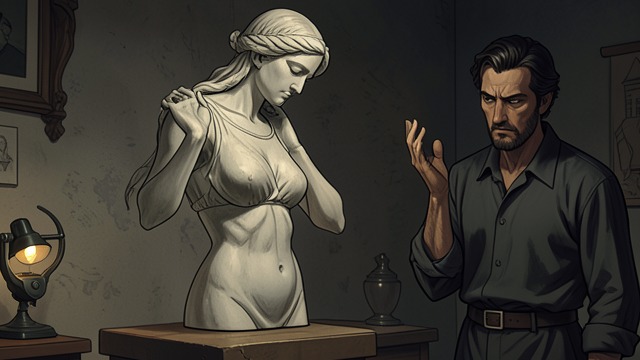
A Figure of Submission
Borrowed Form
Henrietta uses Gerda's neck and shoulders to create The Worshipper. The figure transforms physical obedience into terrifying devotion.
John's Recognition
John sees himself as the object of its worship and feels accused by the sculpture. Art exposes a truth that ordinary conversation keeps concealed.
Ygdrasil as Clue
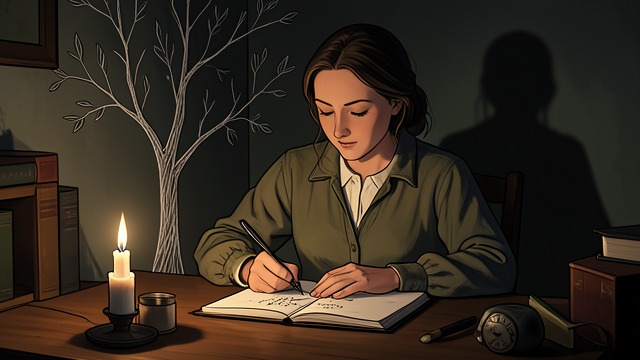
The Unconscious Signature
Deliberate Doodle
Henrietta returns to the pavilion and draws Ygdrasil by matchlight. She plants a recognizable mark to attract Poirot's suspicion toward herself.
Artifice and Truth
The drawing is both false evidence and genuine expression. It reveals the artist's mind while disguising the actual sequence of the murder.
The Clay Horse
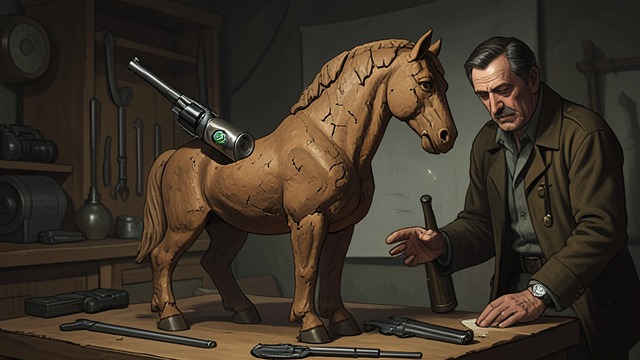
Concealment as Sculpture
Hidden Weapon
Henrietta hides the fatal revolver inside an armature and builds a rough clay horse around it. The artwork becomes a physical vault.
Unconscious Association
The horse recalls the Trojan horse, linking artistic creation with deceptive concealment. Poirot eventually recognizes that the sculpture is a clue to the method.
Grief in Alabaster
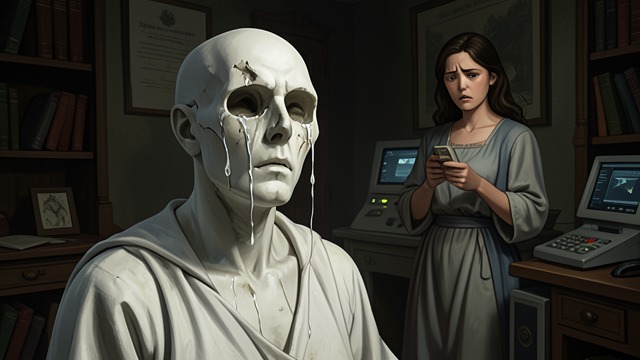
Sorrow Made Visible
Emotional Limitation
Henrietta admits that she cannot grieve as Midge would. Her feelings must pass through form before she can endure them.
Final Transformation
She imagines an alabaster figure called Grief. The act does not cure her loss, but it gives the loss a shape that can survive.
Friday before the weekend
Before the weekend
Sunday night
During the fortnight adjournment
Final chapter
